Most retail platforms weren't designed for the pace of modern commerce. They were built to display a catalog and take an order, and everything since has been bolted on. The result is a set of recurring problems that quietly cap growth. Here are the six we see most often, and what actually fixes them.
1. Personalization That Doesn't Scale
Rule-based merchandising ("customers who bought X see Y") works until your catalog has thousands of SKUs and your audience has dozens of intents. Then it collapses into generic recommendations that convert poorly.
The fix: collaborative filtering and content-based models that re-rank per shopper in real time. Instead of one merchandised page for everyone, every visitor sees a storefront ordered by their predicted intent. The lift shows up first in search and PDP recommendation slots.
2. Cart Abandonment Bleeding Revenue
The industry average hovers near 70%. Most teams respond with a single delayed email and call it a recovery program.
The fix: behavioral trigger systems that respond to exit intent, scroll depth, and dwell time, deploying the right intervention (on-site nudge, push, email, SMS) at the right moment. Recovery rates of 15–22% of abandoned sessions are achievable when the triggers are timed to behavior rather than the clock.
3. Inventory That's Always Wrong
Stockouts lose the sale; overstock destroys margin. Both come from forecasting that leans on last year's spreadsheet.
The fix: time-series ML that integrates historical sales, seasonality, promotions, and real-time signals to forecast at the SKU level. Done well, it drives automated purchase orders on reorder triggers and keeps inventory accuracy above 90% without manual babysitting.
4. Search That Doesn't Understand Intent
Shoppers who search convert at 2–3× the rate of browsers, but only if search works. Keyword matching that chokes on typos and synonyms sends high-intent shoppers to a zero-results dead end.
The fix: AI-powered search (Algolia plus custom ranking, or vector search) that handles natural language, tolerates typos, and personalizes ranking per segment. Eliminating zero-result queries alone recovers meaningful revenue.
5. Retention Treated as an Afterthought
Acquisition gets the budget; retention gets a quarterly newsletter. Yet repeat buyers drive the bulk of profitable revenue.
The fix: RFM segmentation, churn prediction, and CLV forecasting that identify exactly which customers to invest in, and trigger retention campaigns before they lapse. Targeted lifecycle flows routinely outperform generic blasts several times over.
6. Mobile Experiences That Lag the Web
Mobile is where the traffic is, yet many apps are slower, thinner versions of the desktop site with personalization stripped out.
The fix: high-performance React Native or Flutter apps with AI embedded on-device: push personalization, visual search, and smart notifications. The goal is an app that's more intelligent than the web experience, not less.
The Common Thread
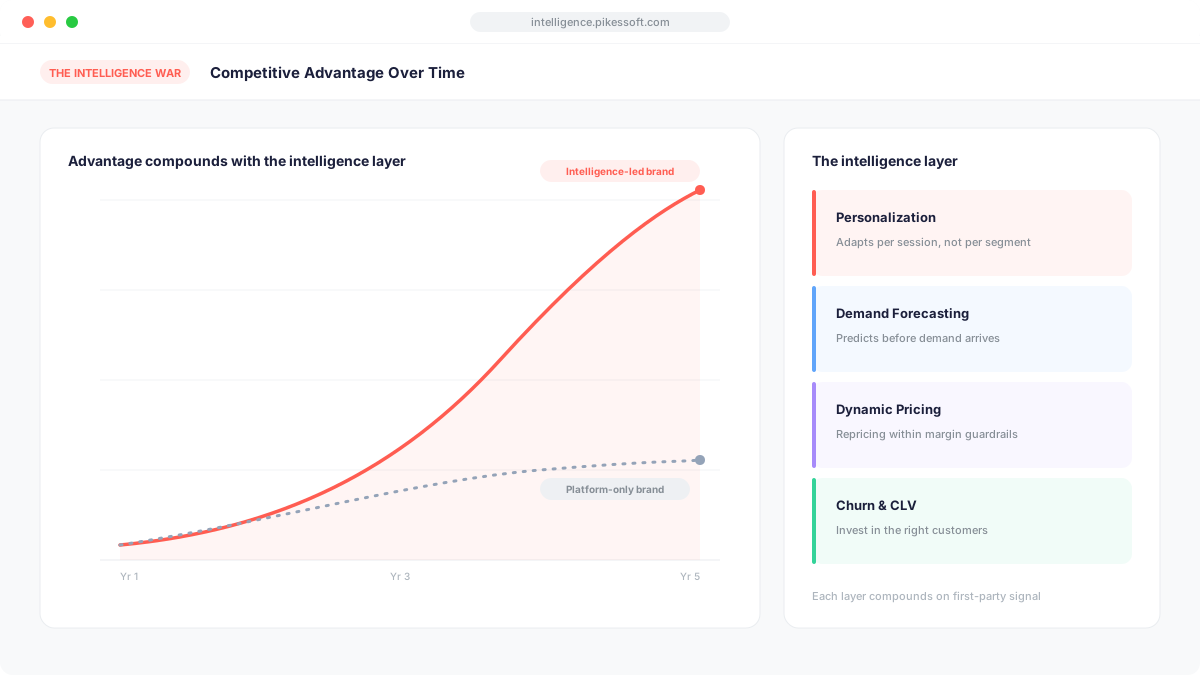
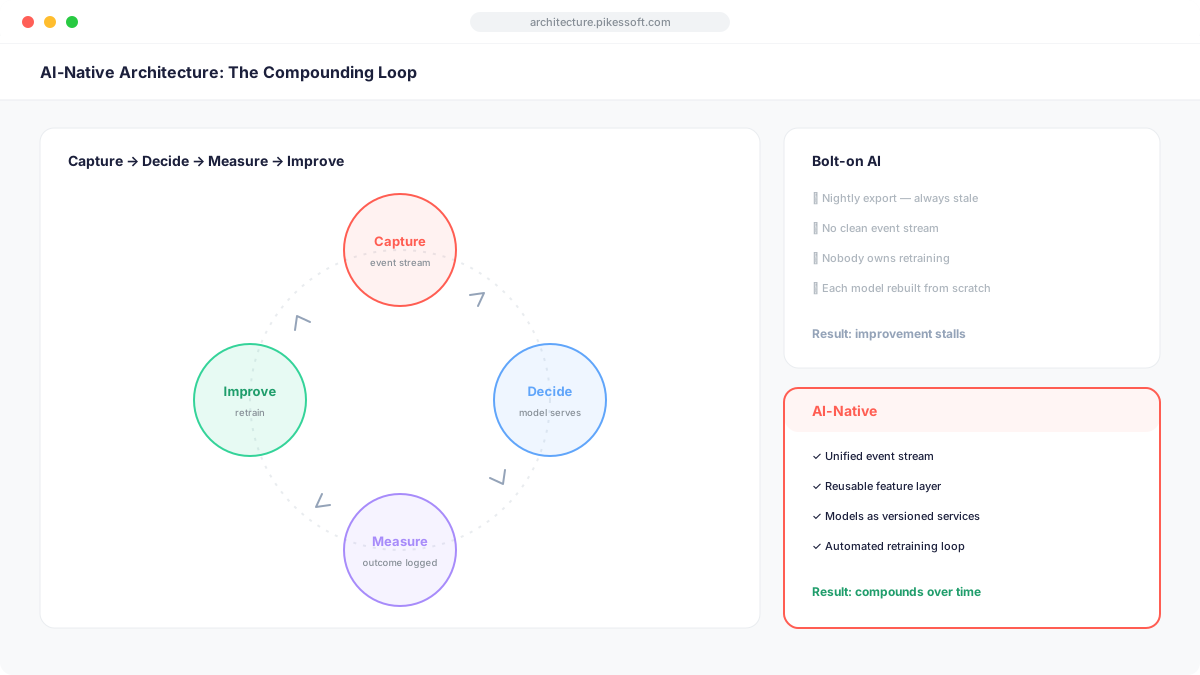
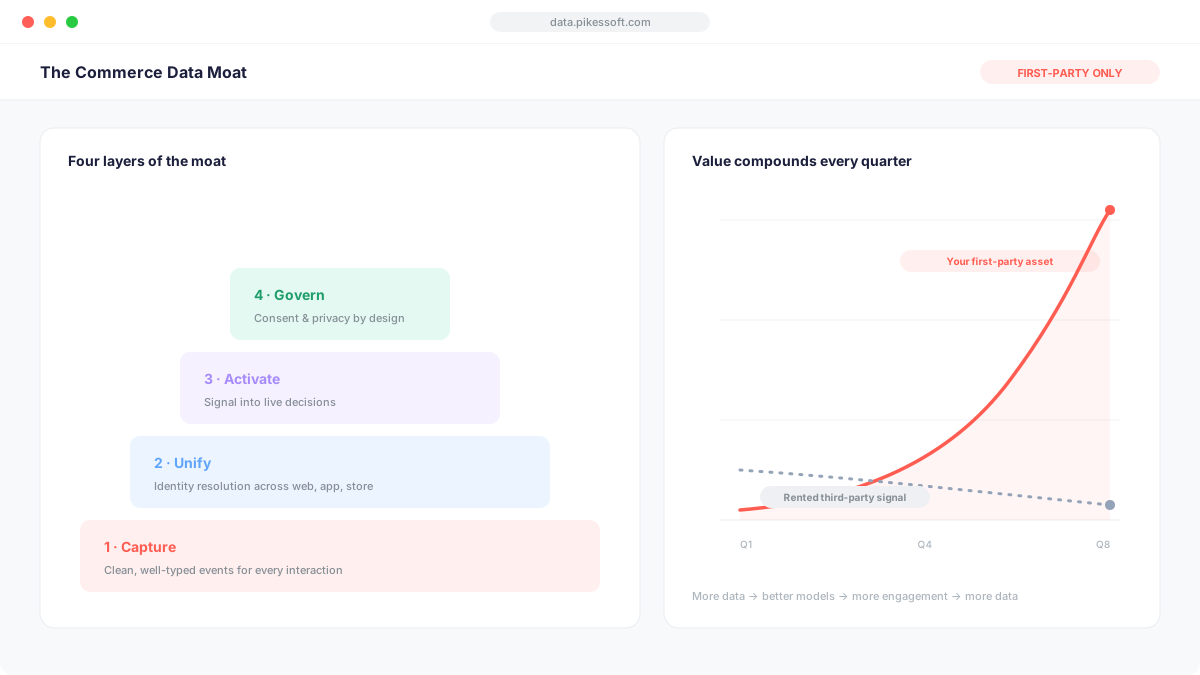
Notice the pattern: every one of these is a data problem wearing a UX costume. The platforms that solve them share an architecture, clean first-party data flowing into models that drive decisions automatically, with feedback loops that improve the models over time.
You don't fix six problems with six point solutions. You fix them by building the intelligence layer once and pointing it at each decision in turn. Start with the highest-leverage one, usually search or recommendations, prove the lift, and expand.
The retailers who treat these as isolated bugs will be patching forever. The ones who treat them as symptoms of a missing intelligence layer will solve them structurally, and stop the bleeding for good.