There are two ways to put AI into a commerce platform. The first is to bolt it on: ship the product, then bolt a recommendation widget and a chatbot onto the side. The second is to build AI-native: treat data and models as first-class architectural concerns from day one. They look similar in a demo. In production, one compounds and one stalls. We've built both, here's the difference that matters.
Bolt-On AI: Where It Breaks
A bolted-on system treats the model as an external dependency. The app calls a recommendation API, gets a list back, renders it. It works on launch day. Then reality arrives:
- The model trains on a nightly export, so it's always a day stale.
- There's no clean event stream, so the features are thin and the predictions are generic.
- Nobody owns retraining, so the model decays as behavior shifts.
- Adding a second model (search ranking, say) means rebuilding the plumbing from scratch.
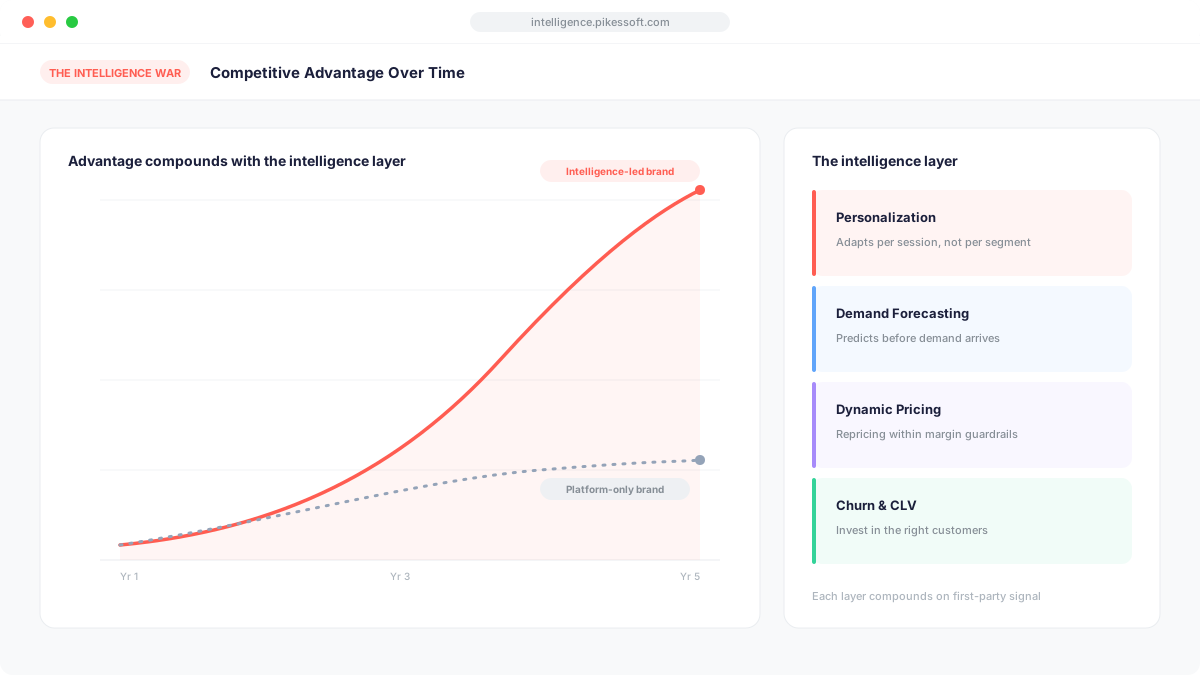
The intelligence never compounds because the architecture doesn't let it. Each model is a one-off integration, and the data that should fuel improvement leaks away.
AI-Native: The Foundation
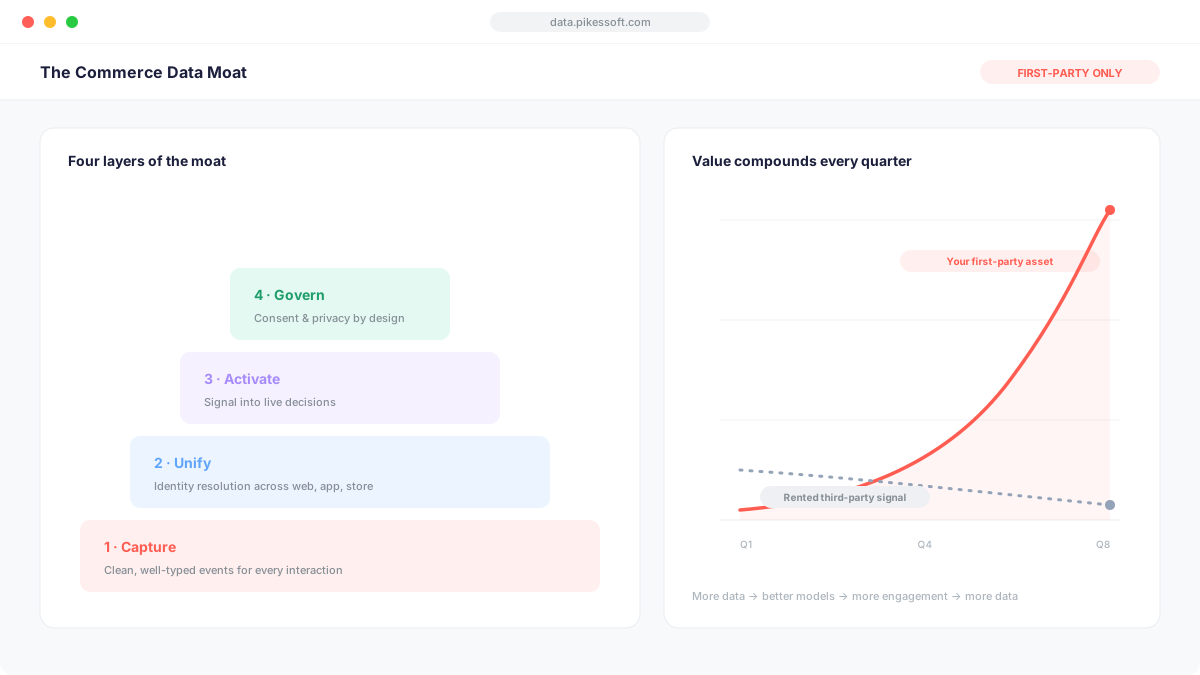
An AI-native platform is organized around a simple loop: capture signal → make a decision → measure the outcome → improve the model. Concretely, that means a few non-negotiable pieces exist from the start.
A Unified Event Stream
Every meaningful action (view, search, add-to-cart, purchase, return) flows into a single, well-typed event store. This is the fuel. Without it, every model is undernourished. With it, new models are cheap to add because the features already exist.
A Feature Layer
Raw events become reusable features (recency, frequency, affinity, session intent) computed once and served to every model. The second model is far cheaper than the first because it draws from the same well.
Models as Services, Not Exports
Predictions are served behind low-latency endpoints with versioning, not dumped to a nightly file. That makes real-time personalization possible and makes A/B testing model versions a routine operation.
A Retraining Loop
Models are living systems. An AI-native platform monitors for drift, retrains on a schedule (or on trigger), and redeploys with the same rigor as application code. The model that shipped is not the model running six months later, by design.
A Concrete Example
Consider on-site search. In a bolt-on world, it's a keyword index that someone tunes by hand. In an AI-native world:
Query → intent embedding → candidate retrieval (vector + keyword)
      → personalized re-ranking (per-segment model)
      → result + click logged back to the event stream
That final step is the whole game. Every search teaches the system what "good" looks like for that query and that shopper. The bolt-on index learns nothing from the click. The AI-native pipeline gets sharper with every session.
Why This Compounds
The advantage isn't any single model. It's the rate of improvement. An AI-native platform improves continuously because the loop is built in. A bolt-on platform improves only when an engineer manually intervenes, which is to say rarely.
Over a year, the gap is enormous. We've watched AI-native systems we built go from decent to dominant on recommendation relevance and forecast accuracy without a single architectural rewrite, because the architecture was designed to learn.
How to Get There Without a Rewrite
You don't need to stop everything and re-platform. The pragmatic path:
- Stand up the event stream first. It's the foundation everything else depends on, and it pays off immediately in analytics even before the first model.
- Ship one model through the full loop. Pick a high-leverage decision, serve it as a versioned service, and wire the outcomes back in.
- Make retraining boring. Automate it. A loop that requires heroics won't survive contact with a busy quarter.
- Expand model by model. Each one is cheaper than the last because the foundation is shared.
The Takeaway
Bolting AI onto a platform gets you a feature. Building AI-native gets you a system that improves on its own. The first is a line item; the second is a compounding asset. If you're building for the next five years of commerce, design for the loop (capture, decide, measure, improve) and let the architecture do the compounding for you.