Brands can be matched. Products can be copied. Prices can be undercut. But a deep, clean, well-governed first-party data asset, built over years and wired into every decision, is the one advantage a competitor can't simply buy their way into. In a world where third-party signal is disappearing, the data moat is the most durable edge in commerce.
Why Now
Two forces make this urgent. First, third-party cookies and cross-site tracking are gone or going, so the rented audiences brands leaned on for a decade are evaporating. Second, AI has made data directly operational: first-party signal isn't just for dashboards anymore, it's the fuel for the models that run personalization, pricing, and forecasting.
The brands that own rich first-party data are about to pull away. The ones who rented their signal are about to discover they own very little.
What a Data Moat Actually Is
It's not "we have a data warehouse." A genuine moat has three properties:
- Proprietary: behavioral signal from your shoppers that no competitor and no vendor possesses.
- Compounding: it grows more valuable over time as volume and history accumulate.
- Operational: it's wired into decisions, not just reports. Every record makes a model better.
A pile of data that sits in a warehouse and feeds quarterly slides is a cost center. The same data feeding live recommendation, pricing, and churn models is a moat.
The Four Layers
Building the moat means getting four layers right, in order.
1. Capture
Instrument every meaningful interaction (views, searches, add-to-carts, purchases, returns, support contacts) as clean, well-typed events. The discipline here is consistency: a half-instrumented funnel produces models with blind spots.
2. Unify
Resolve identity across web, app, email, and in-store so one customer is one profile, not five fragments. Identity resolution is unglamorous and decisive, models trained on fragmented identities learn fragmented behavior.
3. Activate
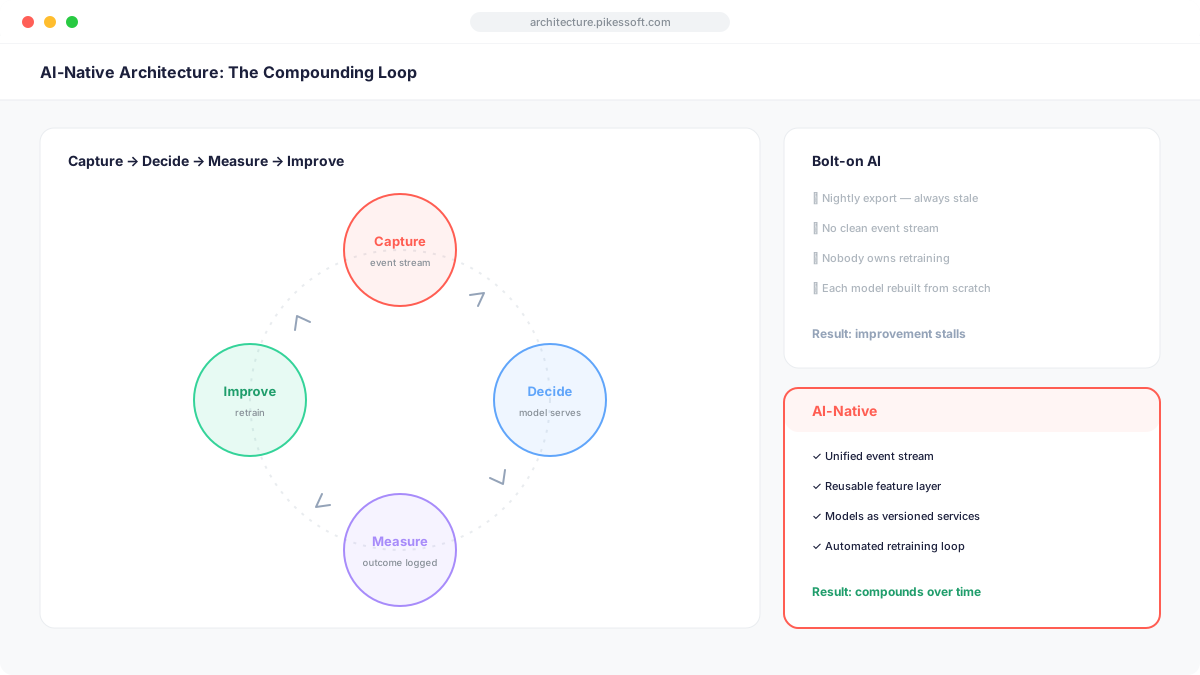
This is where most programs stall. Data that only reaches a BI tool is inert. The moat forms when signal flows into live decisions: search ranking, recommendations, dynamic pricing, retention triggers. Activation is what turns the data from a report into an asset.
4. Govern
Consent, retention policies, and privacy-by-design aren't friction. They're what keeps the asset usable and trusted. A moat built on shaky consent is a liability waiting to trigger. Build governance in from the start; retrofitting it is painful.
How It Compounds
The mechanics of the compounding are simple and powerful:
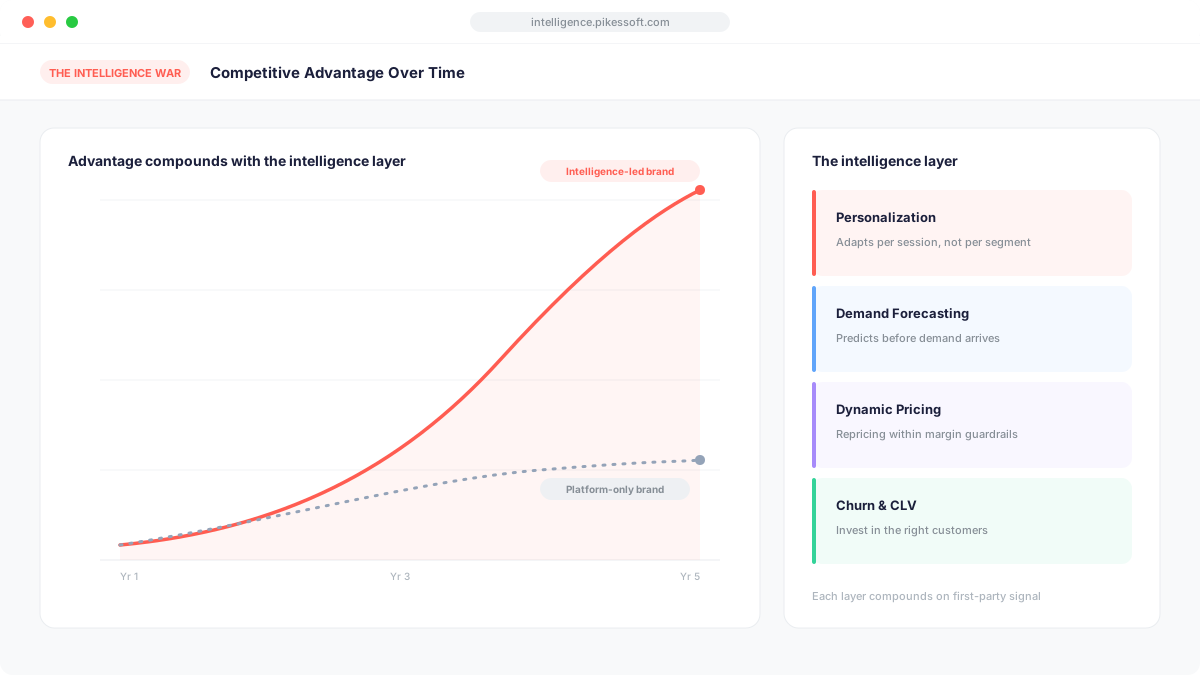
- More data → better models → better experiences.
- Better experiences → more engagement → more data.
- Repeat.
A competitor starting today faces a cold start: no history, no behavioral depth, models that can't yet personalize well. You, having started two years earlier, are operating on signal they won't possess for years. The lead doesn't just persist. It widens, because your loop is already turning.
Common Mistakes
- Hoarding without activating. Data that never reaches a decision is a storage bill, not a moat.
- Fragmented identity. Without resolution, you're modeling sessions, not customers.
- Treating governance as an afterthought. Consent gaps can render your most valuable signal unusable overnight.
- Buying signal instead of building it. Purchased data is, by definition, available to everyone who can write the check. It's the opposite of a moat.
Where to Start
If you're early: stand up clean event capture and identity resolution first. They're the foundation, and they pay off in analytics even before the models arrive. If you already have the data: audit how much of it actually reaches a live decision. For most teams, the gap between "data collected" and "data activated" is where the entire opportunity is hiding.
The Bottom Line
Every other advantage in commerce is rentable or replicable. A compounding first-party data asset, governed well and wired into decisions, is neither. Build it deliberately (capture, unify, activate, govern) and it becomes the one part of your business that gets more defensible every single quarter.